Overview
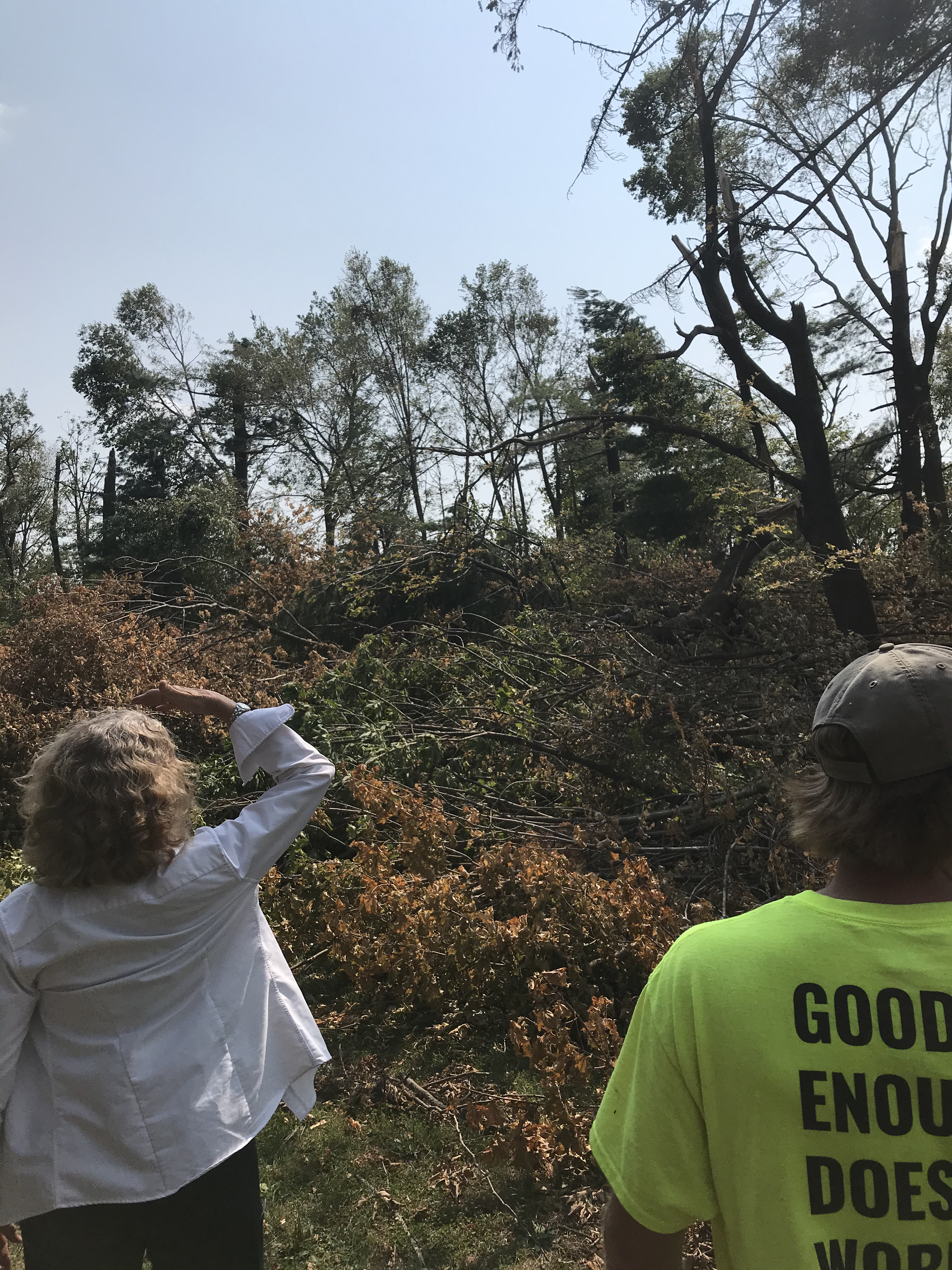
August 10, 2020 is a date that is lodged in the minds of many Iowans. In just 45 minutes, some 670,000 trees—roughly 70% of the existing tree canopy of Cedar Rapids—were destroyed, leaving neighborhoods once flourishing with life barren and windswept. The derecho, a rare windstorm with hurricane-force winds, left an indelible mark on all who experienced it, and spared no part of the community.
Rather than rushing to replant and restore the lost canopy, city leaders and community partners made the deliberate decision to pause, assess the damage, gather resident input, and develop a long-term strategy. The result of this pause was the ReLeaf Cedar Rapids Plan; a thoroughly researched and detailed roadmap for rebuilding a stronger, more diverse, and equitable urban forest.

Stop:
Resist the urge to act immediately; use the pause to plan well and thoroughly.
Collaborate:
Build partnerships between public and private entities, dividing roles according to strengths and areas of expertise.

Listen:
Engage community members continuously, not just at the outset.
Background: A City Shaped by Disaster
Cedar Rapids is no stranger to natural disasters. In 2008, the city endured a catastrophic flood. Water levels crested to their highest levels in Cedar Rapids history, reaching as much as 31 feet. Floodwaters penetrated 10 square miles of the city, and 5,390 homes were affected by the flood, with18,000 residents dislocated. Recovery from the flood was slow, deliberate, but ultimately transformative. Cedar Rapidians learned that rebuilding required more than reconstruction, but reimagination and a chance to start anew.
The lessons learned from the flood proved invaluable when Cedar Rapids faced its next crucible; the 2020 derecho. In 45 minutes, hundreds of thousands of trees were leveled, as were thousands of homes and buildings. And, once more, Cedar Rapidians mobilized to help each other, clearing roads of debris, helping mitigate the loss of electricity, and forming communal support networks.
When the immediate danger was mitigated thanks to the tireless work of thousands of residents, the city was left with a daunting task. On top of the damage to road networks, homes, businesses, and city property, the loss of trees would leave critical gaps. The role of trees in moderating temperature, managing stormwater, filtering air, providing a habitat to wildlife, and anchoring neighborhood identity was suddenly missing altogether. Cedar Rapids, once known as “The Emerald City”, was in dire straits, and had to rethink its approach to species selection, spatial equity, long-term maintenance, and community ownership, all in the midst of a global pandemci that complicated every aspect of outreach and engagement.
Step One: Stop
In the immediate aftermath of the derecho, the City of Cedar Rapids’ first priority was public safety; clearing hazards, grinding stumps, and removing debris from streets, parks, and yards. This work would take months of hard work to complete and created an opening; a chance to take a deliberate pause before taking on the task of large-scale replanting.
To start, the City of Cedar Rapids and it partners evaluated the work that needed to be done and asked some critical questions:
Who needed to be at the table?
How could the city build a stronger, more resilient canopy?
What lessons could be gleaned from peer communities and prior disasters?
How would equity shape decisions about where trees were planted and who received support?
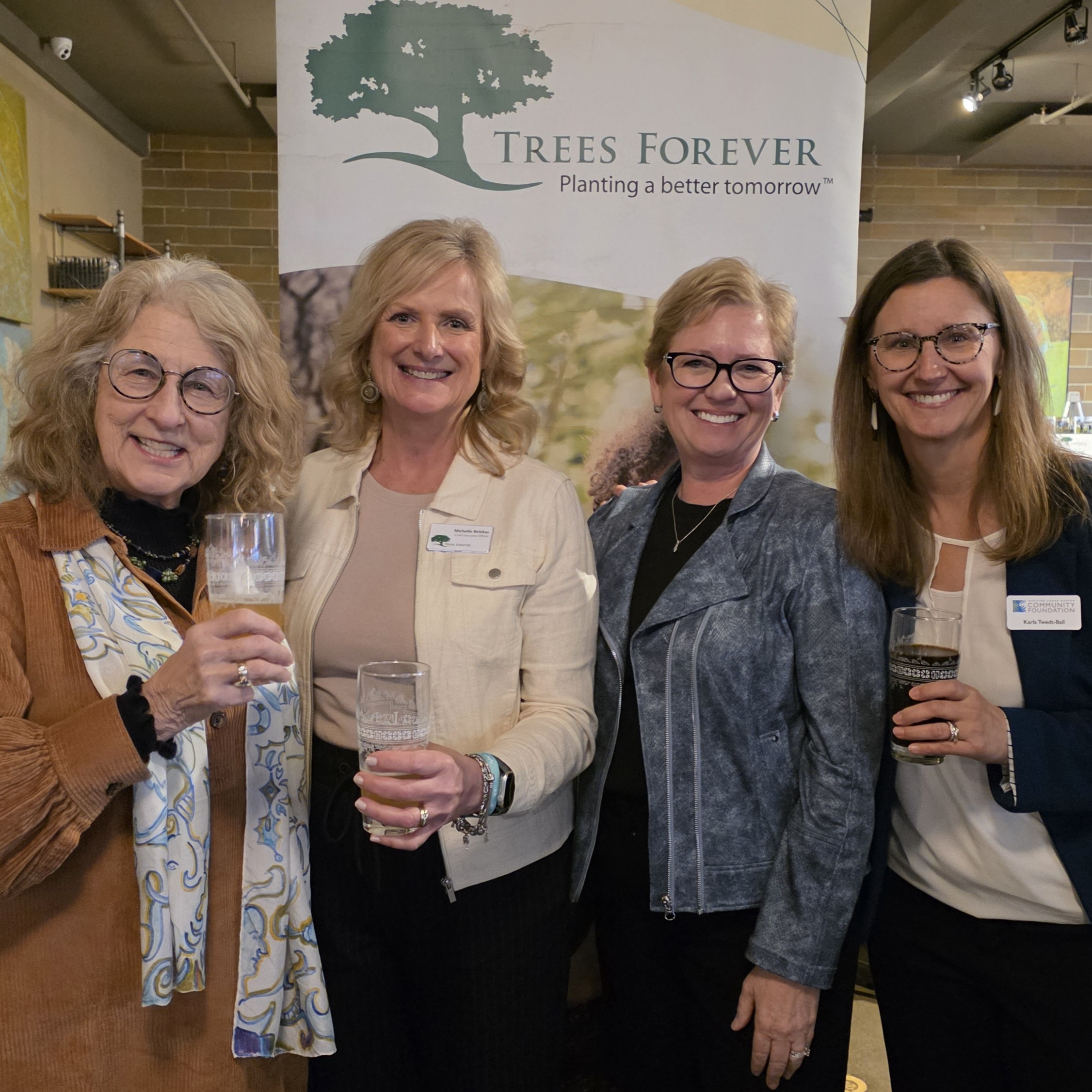
It was during this initial assessment period that the City of Cedar Rapids reached out to a natural partner; Trees Forever. Founded in 1989, Trees Forever was based in the Cedar Rapids metropolitan area, and had extensive experience planting trees, training volunteers, and building relationships. With its deep community roots and expertise, a partnership between Trees Forever and the City of Cedar Rapids was a natural fit for the sizable task of replanting the trees lost in the derecho.
An early step in the partnership was to look beyond Cedar Rapids for guidance. While the derecho itself was a rare occurrence, other communities had suffered large-scale canopy loss. Galveston, Texas lost 40% of its trees after Hurricane Ike swept through in 2008, while Calgary Alberta suffered similar canopy loss during a massive ice storm in 2014. Through analyzing these disasters, common threads began to emerge; the importance of long-term planning, public engagement, and resilience-building.
All told, the City of Cedar Rapids and Trees Forever took approximately 18 months to assess and plan the replanting efforts that would become ReLeaf. To bridge this gap, Trees Forever undertook several community tree distributions and educational initiatives to get residents some trees during the pause and worked closely with the city government to develop the ReLeaf plan.
The vision for the ReLeaf plan would materialize during this planning period, capturing the ambition and values of the effort while framing the plan itself with input from the growing coalition of stakeholders and residents:
ReLeaf Cedar Rapids is committed to rebuilding a resilient canopy of mostly native trees, one that preserves citywide plant diversity and distinct neighborhood character, while striving to limit climate change, increase social equity, encourage volunteerism, grow human capital, and educate our children.
This mission statement reflected priorities identified by residents and partners as crucial to any replanting effort. Through this mission, the framework of the ReLeaf plan would be assembled and the long road to recovery able to begin in earnest.
Step Two: Collaborate
With the pausing period of assessment and analysis completed, residents, neighborhood leaders, businesses, and other stakeholders were brought to the table to give input on the plan and its direction. The aforementioned priorities would become the core of the ReLeaf plan, focusing on habitat preservation, a diverse and mostly native canopy, equitable access to trees, and long-term climate resilience.
From that, the City of Cedar Rapids divided responsibilities according to their strengths and areas of expertise. The City would take the lead on the public side of the plan, coordinating contracts, planting and maintaining street and park trees, and focusing on long-term investments to support planting efforts. Trees Forever would focus on the private side of the plan, mobilizing volunteers, supporting homeowners, working with schools and institutions, and providing education while focusing on private property replanting.
Collectively, this public-private partnership built the foundation of the ReLeaf plan, and ensured that each organization’s strengths complemented the other. The City’s scale, infrastructure, and resources and Trees Forever’s trust, relationships, and grassroots expertise synthesized into a solid and strategic framework for derecho recovery.
Collaboration in Funding
The funding structure of ReLeaf illustrates how public and private resources can be strategically aligned to accomplish its goals. The City of Cedar Rapids accessed municipal budgets, state and federal funding streams, and large-scale infrastructure dollars, while Trees Forever pursued private philanthropy, foundation grants, individual donor campaigns, corporate sponsorship, and community fundraising. In tandem, these funding streams gave stability to long-term planning and allowed for consistent investment in public tree planting.
Funding partnerships extend into the community itself. Trees Forever’s Tree Voucher program exemplifies how layered partnerships can extend dollars. After attending a 30-minute educational program, residents receive a voucher to purchase trees from 7 participating local nurseries. This arrangement has widespread benefits; nurseries gain customers and business, residents gain knowledge and trees, and the program gains data on popular species and planting locations. A self-reinforcing loop that advances funding, education, and planting simultaneously is the end result.
Collaboration in Outreach
Outreach has been another area where collaboration has been vital to success. The City of Cedar Rapids commands significant communications infrastructure through its websites, newsletters, utility bill inserts, press releases, and social media following. When the City promotes a program, it reaches thousands of residents automatically.
Trees Forever provides an alternative, but equally powerful kind of reach in the form of depth. Staff are deeply embedded in Cedar Rapids communities, attending neighborhood association meetings, hosting educational sessions, and engaging residents at community events. As a nonprofit, approachability and relatability are powerful tools.
The Neighborhood Tree Captains program is a powerful example of this principle. Inspired by Root Nashville in Tennessee—which helped that city recover from a tornado—the NTC program empowers local residents to take direct ownership over replanting their blocks. Through answering questions, rallying volunteers, and building neighbor-to-neighbor trust, Tree Captains exemplify a grassroots approach to replanting that lies at the heart of the ReLeaf effort. The program also demonstrates that the most effective outreach does not require reinventing the wheel; only adapting proven models to a local context.
The ReLeaf Master Tree List also serves a similar function. Developed collaboratively and with input from arborists and subject matter experts, the list provides residents, businesses, and contractors with clear and thorough guidance on recommended tree species, growth patterns, and the “right tree, right place” principle. Even before the derecho, tree loss from pests like the Emerald Ash Borer and diseases like Dutch Elm Disease demonstrated the need for a diverse tree canopy. The Master Tree List was developed to demonstrate to residents the rationale of age and species diversity in building long-term canopy resilience while emphasizing the need to plant native trees whenever possible.
Collaboration in Implementation
Funding and outreach only matter if they produce trees in the ground. Implementation is where the ReLeaf partnership becomes most tangible. The City provides professional crews, contractors, and infrastructural resources to manage large-scale street and park plantings. Trees Forever, in turn, contributes to volunteer coordination, community engagement, and neighborhood leadership support, synergizing each organization’s strengths to ensure that planting days are successful and can sustain momentum. Flexibility in the partnership also ensures that the inevitable hiccups and issues that arise in any large-scale project are resolved swiftly and efficiently. For instance, when road construction has prevented street tree planting in a given area, Trees Forever has been able to redirect resources to private yards, school campuses, or nearby green spaces to ensure that recovery continues at a good pace even if street planting isn’t possible.
To enable and strengthen lines of communication, Trees Forever and City staff meet year-round, and have shared maintenance tracking tools and mapping systems to ensure that issues are flagged quickly, responded to in a timely manner, and that trees are given their best chance to survive.
Volunteer groups are a critical factor in implementing the ReLeaf plan. Many participants come through corporate volunteer programs, bringing energy and team commitment to planting days. Maintaining educational, well-organized, and rewarding volunteer experiences ensure that one-time participants can become long-term partners and donors, and has resulted in many businesses returning year after year to support the ReLeaf effort.
Individual volunteers illustrate the same dynamic. Residents who engage in ReLeaf programs through supporting right-of-way plantings, mentoring youth, attending community tree distributions, and sharing feedback from the community serve as the backbone of the program’s ground level success.

Step Three: Listen
If stopping to plan and collaborating to act were the momentum-building steps necessary to galvanize the ReLeaf plan, then Listening is the final piece that keeps the effort grounded and continuing to grow. Listening is not simply about collecting feedback and checking off a box, but a vital method of building trust, adjusting approaches, and ensuring recovery is done with the community, rather than for it. Communities change, needs evolve, and new voices emerge, meaning that a plan built on a single snapshot of community input will inevitably drift out of alignment. A plan built on ongoing listening remains grounded in lived experience at every stage.
At the outset of the ReLeaf Plan, thousands of residents helped guide the work through surveys, workshops, and neighborhood meetings. Considering that this public input stage took place in tandem with the COVID-19 pandemic, reaching residents in a meaningful way was a significant challenge that required creativity and persistence.
Engagement methods such as the City’s Rolling Rec Mobile brought outreach directly into neighborhoods and met people where they were, rather than waiting for residents to come to them. These, as well as neighborhood meetings and workshops, enabled the City and Trees Forever to hear from residents directly. Concerns voiced in these encounters guided ReLeaf’s core principles; habitat preservation, native and divers species selections, equitable canopy distribution, and climate action. These inputs shaped every major decision, from which species would be recommended to which neighborhoods would receive priority planting resources.
To succeed, ReLeaf had to be written as not a fixed blueprint but a living document, meant to evolve with the community it served. Ongoing and sustained listening has remained vital to the plan, and has produced meaningful adaptations.

Trees Forever’s Campus Canopy 10+ program arose directly out of conversations with schools, churches, and other institutions. Early replanting efforts focused primarily on individual yards, but as staff began to engage with larger campuses and institutions, a different need became clear; institutions wanted access to trees at scale, combined with guidance on planting and ongoing care. The CC10+ program was created to address that gap by providing trees and hands-on education while campuses contributed volunteer labor. These partnerships accelerated replanting while deepening campus ownership and stewardship.
The social impact of listening extends beyond program design; residents who feel heard are more likely to volunteer, advocate for the program, and spread the word in their own networks. Over time, this can turn participants into champions, who can then multiply the impact of every tree planted.
A shining example of ongoing listening and community connection is the Party in the Park event. This casual community barbecue celebrates volunteers, showcases progress, and creates an open space for neighbors to ask questions, share feedback, and interact with Trees Forever and City of Cedar Rapids staff. Listening is the key to this event, and staff are there to answer questions, share resources, and listen to feedback while neighbors connect with each other in a relaxed, welcoming setting.
Conclusion: Stop, Collaborate, and Listen
The ReLeaf Cedar Rapids initiative demonstrates that large-scale urban forest recovery is achievable when communities resist the urge to act before they are ready. The three-part framework at the heart of ReLeaf offers a practical guide for any city, county, or organization facing canopy loss.
Stop
long enough to understand the true scope of the challenge. Ask difficult questions, identify the right partners, and build a plan grounded in community values and peer-learned lessons.
Collaborate
with partners whose strengths complement your own. Divide responsibilities clearly, align funding and communication, and build the operational
infrastructure (shared tools, regular coordination, flexible response) that sustains a long-term effort.
Listen
not once, but continuously. Treat community engagement as an ongoing practice that shapes program design, builds trust, and turns residents into stewards and advocates.
Cedar Rapids did not develop this framework from scratch; it drew on lessons from its own past as well as those from Galveston, Calgary, Nashville, and others, borrowing wisely and adapting to local context. The ReLeaf Cedar Rapids plan is publicly available for any community that faces a similar challenge.
When we stop, collaborate, and listen—we don’t just rebuild what was lost. We grow something even stronger.
Communities facing similar canopy loss are encouraged to reach out to the City of Cedar Rapids and Trees Forever for guidance, resources, and partnership. The work of rebuilding an urban forest is long, but no community needs to do it alone.