
On August 10, 2020, the city of Cedar Rapids, Iowa, experienced devastation unlike anything in its history. A derecho, an intense windstorm with hurricane-force gusts, swept through the city, leaving more than 670,000 trees snapped, uprooted, or destroyed in under an hour. Homes and power lines were toppled. Streets were blocked. Neighborhoods were unrecognizable.
Cedar Rapids, once defined by its lush canopy, suddenly stood exposed. The landscape had changed but so had the emotional and ecological fabric of the community. The storm made one thing unmistakably clear: trees are infrastructure—and communities must plan accordingly.
Cedar Rapids has made tremendous strides since the storm. Through those urban tree canopy recovery efforts Trees Forever has learned a lot about building community support around green infrastructure and what it takes to grow a thriving urban forest. Through this paper, Trees Forever hopes to help communities who are faced with the devastation of natural disasters learn from our efforts and get a head start on recovery.

In the months and years following the storm, Trees Forever and the City of Cedar Rapids formed a deep public-private partnership to guide the city’s reforestation and recovery, ReLeaf Cedar Rapids. But progress didn’t come overnight. It took two years and extensive tree inventories, public forums, and research to develop a community-wide canopy restoration strategy.
From this process came a hard-earned understanding: if your community waits until disaster strikes to think about trees, it’s already too late. Here are the main lessons learned—the kind of knowledge that every community can act on today.
Long before a storm appears on the horizon, a community must lay the groundwork for response and resilience in addressing forestry needs.
One of the most impactful decisions a community can make is creating and empowering a tree board. A tree board is a group of citizens, often volunteer-based, that works to advise, advocate for, and manage a community’s trees. Preparation begins with structure. Communities should ensure they have an active tree board or forestry advisory committee that plays a real role in planning decisions. Without that foundation, it’s difficult to mobilize when disaster strikes.

Another critical step is conducting a forestry inventory. Before a disaster hits, your community needs to know what trees you have, where they are, and what condition they are in. Communities often learn the hard way that without this data, restoration efforts are delayed, inefficient, and expensive. Be sure to pay close attention to the ratio of tree species. Having an overabundance of one type of tree opens the tree canopy up to more significant devastation from a pest invasion such as the Emerald Ash Boar that took out a quarter of the tree canopy in Cedar Rapids before the storm even hit.
Planning must go beyond documentation. A living urban forestry management plan should outline a 3–5-year vision that emphasizes planting the right tree in the right place for the right reason, and always with native, resilient species. Just as importantly, this plan should incorporate a review cycle and integrate with city ordinances, development policies, and climate goals. This plan should serve as the foundation for the tree boards work, ensuring that potential issues are addressed before they become a larger problem.
One of the biggest missteps communities make with urban tree canopy recovery post-disaster is rushing to plant without a long-term care strategy. But growing a canopy is not simply about numbers, it’s about survival and sustainability.

In the early days of ReLeaf Cedar Rapids, thousands of new trees were planted. But that wasn’t the end, it was only the beginning. Newly planted trees require years of care and knowledgeable caretakers. It quickly became evident that more was needed than just plantings.
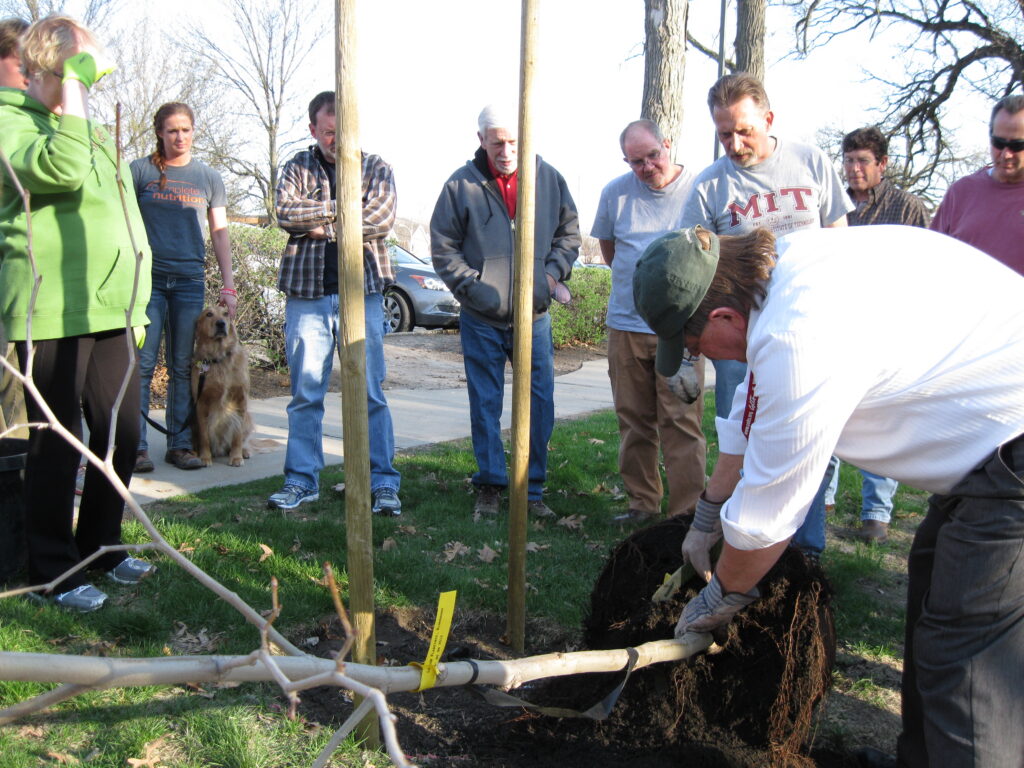
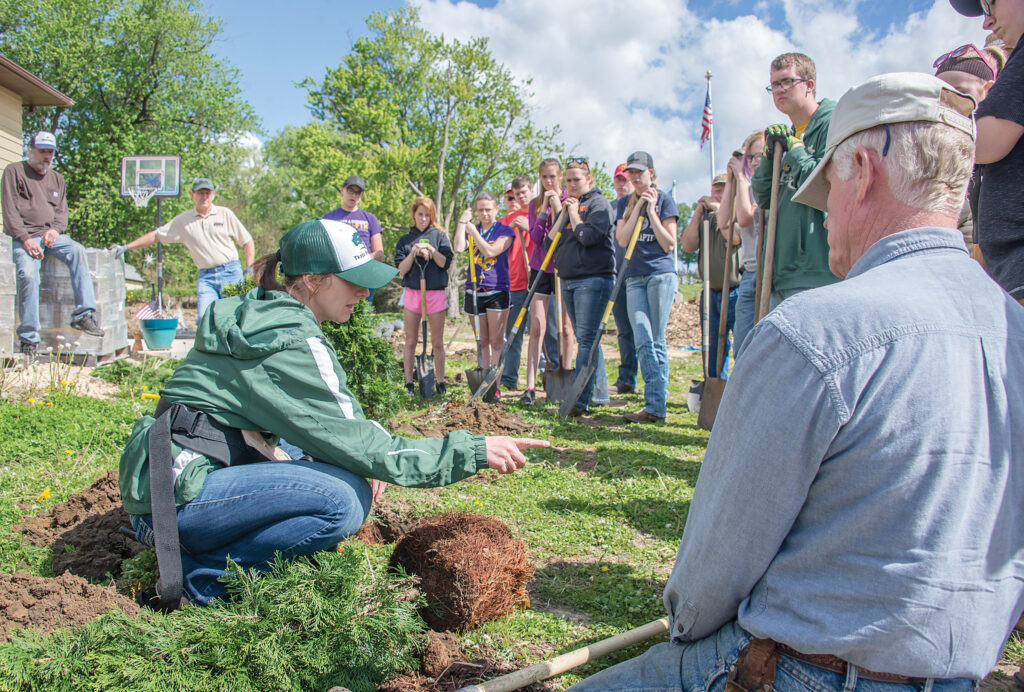
Volunteers were trained in proper planting (ensuring the root flair is above ground and the tree is not too deeply planted), watering protocols (one inch or 5 gallons of water per week), mulching (2–4 inches, held back from the trunk), pruning techniques, and identifying signs of disease or stress.
Another key piece is distributing tree planting checklists to ensure every planting day is successful. These should include utility marking, proper tree spacing, and community volunteers from schoolchildren to retirees. A standardized tree planting process (from root flare identification to staking and watering) will help ensure consistency and tree health.
Recovery in Cedar Rapids is not driven solely through the ReLeaf Cedar Rapids’ partnership with the city government and Trees Forever. It is a community effort in which nonprofits, neighborhood groups, businesses, private donors, schools, and more all played a role.
ReLeaf Cedar Rapids became the umbrella for dozens of grassroots initiatives, tree adoptions, education programs, and community planting days. Through ReLeaf Cedar Rapids, Trees Forever provides essential training, workforce development, and volunteer support. The City of Cedar Rapids uses ReLeaf Cedar Rapids to champion the replanting of public right of ways and parks.
One of the most impactful decisions Cedar Rapids made early in its recovery was establishing a strong ReLeaf steering committee. A successful disaster recovery program starts with a functioning steering committee made up of a diverse group of civic leaders, youth advisors, government officials, nonprofit voices, and engaged citizens. The committee’s success depends not just on good intentions, but also on structure. Defined officer roles (chair, secretary, treasurer) and focused working groups (e.g., volunteer coordination, tree acquisition, fundraising) help build momentum and avoid burnout.
Engaging youth was a key part of this strategy. Using insights from Trees Forever’s youth engagement surveys, planting days included hands-on design input, outreach opportunities, and leadership roles for volunteers under 18. Programs were structured with motivation in mind: food, friendship, and real-world impact.
Fundraising and grant-writing are both essential in the wake of a large-scale disaster. It is vital that these are handled with structure and strategy. A feasibility study helps ensure that recovery plans align with what the community can realistically fund. From securing corporate sponsorships and fundraising events to individual donations and major donors, the campaign must align the messaging, programs, and outcomes with funder interests.
The Community should have one central managing hub like ReLeaf Cedar Rapids, a partnership between major entities, to keep messaging clear and avoid confusing the public with multiple disjointed campaigns. This managing hub should keep a database of grant applications to ensure there are not competing applications and that grant applications are submitted with clear, jargon-free language backed by inventory data and site plans.

Education isn’t just part of the ReLeaf effort, it is central to it. Residents need to understand not just how to plant trees, but how to grow them and why it matters.
Workshops, media outreach, neighborhood meetings, and school programs explain how trees support energy savings, improve water quality, reduce heat islands, and increase property values. Volunteers are trained to talk about these benefits, creating a ripple effect of awareness and advocacy.
Media plays a critical role. Press releases, social media stories, and community videos share the progress of replanting, honors volunteers, and celebrates “tree milestones” with the public. Visibility increases community buy-in and donor support. It is critical that messaging is consistent to avoid confusing the public with conflicting messaging.
Cedar Rapids’ recovery taught a final, vital lesson: disaster planning is most powerful when it’s embedded locally.
While federal and state resources matter, the most meaningful preparation comes from local committees, local data, and local leadership. Communities must take ownership of their urban forests and make trees part of their everyday planning, zoning, budgeting, and infrastructure decisions.
By aligning with Tree City USA standards, establishing ordinances that prioritize tree care, and integrating urban forestry into climate planning, Cedar Rapids is building not only a canopy, but a culture.
The derecho of 2020 was a tragedy. But Cedar Rapids turned that loss into an opportunity to build smarter, greener, and more connected.
Every community will face its own forestry challenges: storms, droughts, pests, or fires. But the story of Cedar Rapids shows that by investing in urban forestry before disaster strikes, recovery becomes not just possible, but transformative. Urban forest recovery can bring communities together if efforts are well coordinated and everyone works together for the benefit of the whole.
Cedar Rapids’ story is one of hope, partnerships, and hard work. Without the help and commitment to rebuild a more resilient, equitable, and sustainable tree canopy from across the community, Cedar Rapids will not succeed. It takes people, organizations, and city government working together toward our shared goal to achieve what seemed an impossible feat in 2020.
Whether you’re starting your first tree committee or updating a citywide plan, the time to act is now. Don’t wait until your canopy is gone to realize how vital it truly is.
Disasters don’t wait. But with the right preparation, your community doesn’t have to be caught off guard.
Trees Forever offers expert guidance, resources, and hands-on support to help communities incorporate urban forestry into their disaster preparedness and climate resilience strategies. Whether you’re a small town or a growing city, we meet you where you are and help you build a roadmap to long-term canopy health.
Here’s how we can help:
A strong community forestry program begins with a strong team. Trees Forever provides support for organizing or revitalizing tree committees, helping you identify local champions, define officer roles, and build a network of stakeholders who will lead your preparedness efforts.
Before you can protect your trees, you need to know what you have. Trees Forever can help your community conduct a tree inventory – mapping species, condition, age, and risks – and use that data to identify vulnerabilities. This becomes the foundation of your disaster plan.
We help communities create or update urban forestry plans that align with best practices: Right Tree, Right Place, Right Reason. Our plans address planting priorities, species diversity, maintenance cycles, and integration with public infrastructure, all essential for reducing risk and speeding post-disaster recovery.
Our community education programs, including Trees Forever TreeKeepers, youth outreach, and local workshops, equip residents with the skills and knowledge to care for trees year-round and assist in emergency response. Trained volunteers are one of your greatest assets in both preparedness and recovery.
Trees Forever can connect your community with funding sources and provide assistance with applications. We help you build the financial foundation to support tree care before and after disaster events.
From site selection to species planning and event coordination, we offer step-by-step guidance for community tree planting projects. We also ensure that post-planting care plans are in place, so your efforts last for decades, not just seasons.
We support your efforts to adopt tree-friendly policies such as ordinances, planting requirements, and maintenance standards, and help align your goals with programs like Tree City USA. This lays the groundwork for institutional support and resilience.
In short, Trees Forever is your partner in growing a stronger, greener, and more disaster-ready future.
To learn more or request support, visit www.TreesForever.org or contact us at info@treesforever.org.
Trees Forever
80 W 8th Avenue, Marion, IA 52302
(319) 373-0650
Together, let’s plant a better tomorrow—one tree at a time.
Subscribe now to keep reading and get access to the full archive.